Providers of administrative services need to regularly reveal the content of feedback by citizens

Brand-new public perception survey results indicate fewer citizen-friendly options for providing opinions on administrative services, compared to PAR Monitor 2017/2018. At the same time, public opinion regarding the involvement of citizens and civil society in monitoring services is clearly growing. When it comes to the availability of information on citizen feedback, websites of service providers are no better than before. Such information on received feedback is mostly absent from their online portals, even in its most basic form.

The public views feedback channels as harder to use but stronger effects of external monitoring of service delivery

Perception surveys indicate that around half of the Western Balkan population sees possibilities to give opinions on the quality of services. This perception grew for almost 20% since the PAR Monitor 2017/2018.[1] On the country level, roughly a third of citizens in Albania and Bosnia and Herzegovina believe this is the case while in all the others, it reaches more than 50% of population.

In terms of the citizen-friendliness however, things appear to have gotten worse. A striking example is Albania, with 42% less of those surveyed noting that feedback channels are easy to use. In four of the countries, this decline is 30 percentage points or more.

More citizens in the region feel they are involved, together with civil society, in monitoring service delivery by administrations (42% as opposed to 26% previously). This has also led to a growing perception that such involvement has in fact improved service delivery. The difference can go as high as 20 percentage points, as in the cases of Kosovo and Bosnia and Herzegovina.

Service providers remain reluctant to divulge details on feedback from citizens

There is a general lack of transparency of the information shared by citizens as feedback. Like the baseline PAR Monitor, administrations share almost no such information regarding five common administrative services. These include property, business, vehicle registration, obtaining personal documents, and VAT declaration and payment.

Still, some have just started publishing information in some areas – in Albania, for vehicle registration, and in Serbia, there is some basic data on the numbers of received and resolved complaints regarding registering businesses.

Overall, without transparency on feedback and how it is being used, citizen-oriented service delivery is hardly imaginable. Providing details on how users feel about services should become business as usual, but is, instead, lacking for the second monitoring cycle in a row. Overall, the PAR Monitor 2019/2020 has shown few major changes, and a certain level of backsliding in two countries.

[1] As in PAR Monitor 2017/2018, public perceptions on awareness of and usefulness of feedback mechanisms, and availability of feedback information to citizens, are measured through public perception surveys implemented in each of the Western Balkan countries in the same manner. Surveys were implemented in the period from the 5 to 30 May 2020.
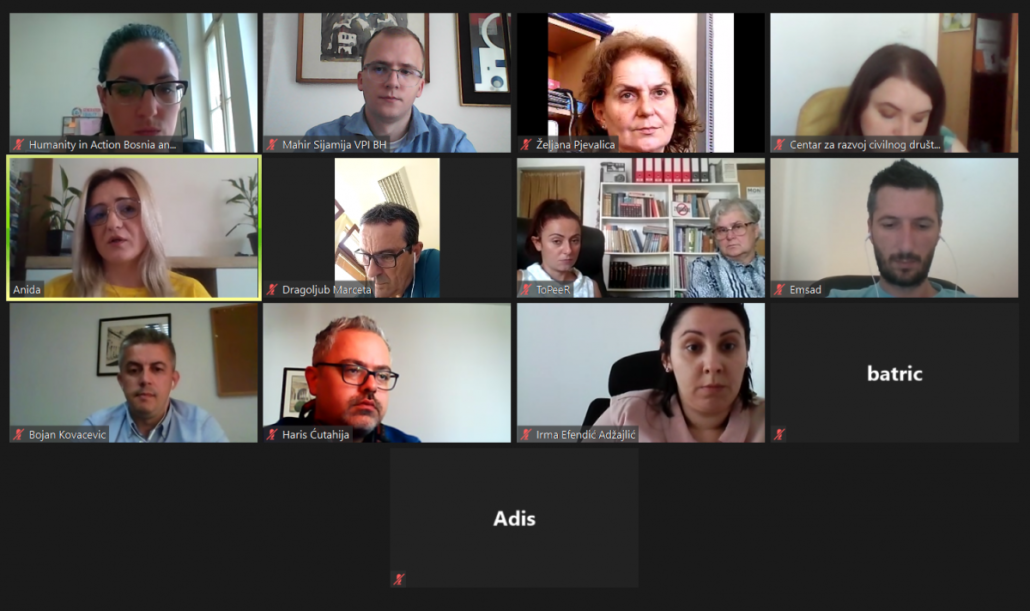
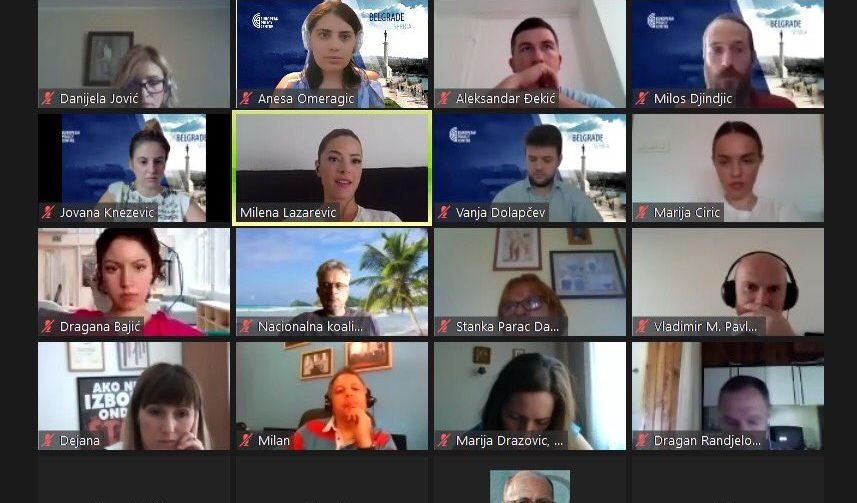
The fifth meeting of the National Working Group for Public Administration Reform in BiH

On the Zoom platform, 22/7/2020 the fifth meeting of the National Working Group (NWG) for Public Administration Reform (PAR) within WeBER in BiH was held. This was the first meeting of the working group in Bosnia and Herzegovina within the new WeBER2.0 project. At the meeting, Mahir Sijamija, VPI BH Project Officer, announced and presented the new program of small grants for civil society organizations. After that, Anida Šabanović, director of VPI BH and Haris Ćutahija, researcher of VPI BH, held a presentation on the topic “European consultations with citizens: introduction and presentation of methods”. The meeting ended with a discussion on the implementation and priorities of public administration reform in Bosnia and Herzegovina and on the status and activities of civil society organizations involved.

The event brought together representatives of civil society, as well as experts in the field of public administration reform.

Meeting of the WeBER National Working Group for Public Administration Reform in Serbia was held

On Thursday, 16 July 2020, the fifth meeting of the WeBER National Working Group (NWG) for Public Administration Reform (PAR) in Serbia was held on the Zoom platform. This is the first meeting of the NWG for PAR in Serbia within the new WeBER2.0 project. The upcoming scheme of small grants facility for civil society organisations was discussed at this event, and researchers from the European Policy Centre (CEP) from Serbia presented the practice of citizens engagement through consultations and the methods of European consultations with citizens.

The members of the NWG were also introduced to the Loomio discussion platform, through which the participants of the meeting had an opportunity to discuss accommodation of the work on sectoral PAR mainstreaming in Serbia and the update of the PAR Resource Centre with new publications, as well as the upcoming call for new members of the NWGs. The plan is to use this platform for further consultations with members of each WeBER national working group in the Western Balkans.

The Western Balkans and the COVID-19: Effects on good governance, rule of law and civil society

This policy brief underscores outstanding issues that emerged during the COVID-19 crisis with possible long-term consequences on the functioning of democracy and rule of law in the six countries of the Western Balkans – Albania, Bosnia and Herzegovina, Kosovo, Montenegro, North Macedonia, and Serbia. This paper specifically addresses the impact of the crisis on the functioning of democratic institutions, the judiciary, fundamental rights and freedoms, transparency, civil society, and the media, and continues to assess its impact on the social and political climates in each country of the region. The report identifies country-specific as well as common issues that should be monitored closely going forward.

Download the brief here.

The-Western-Balkans-and-the-COVID-19-Effects-on-good-governance-rule-of-law-and-civil-society

The COVID-19 Pandemic in the Western Balkans: Effects on Democracy, Rule of Law, and Civil Society

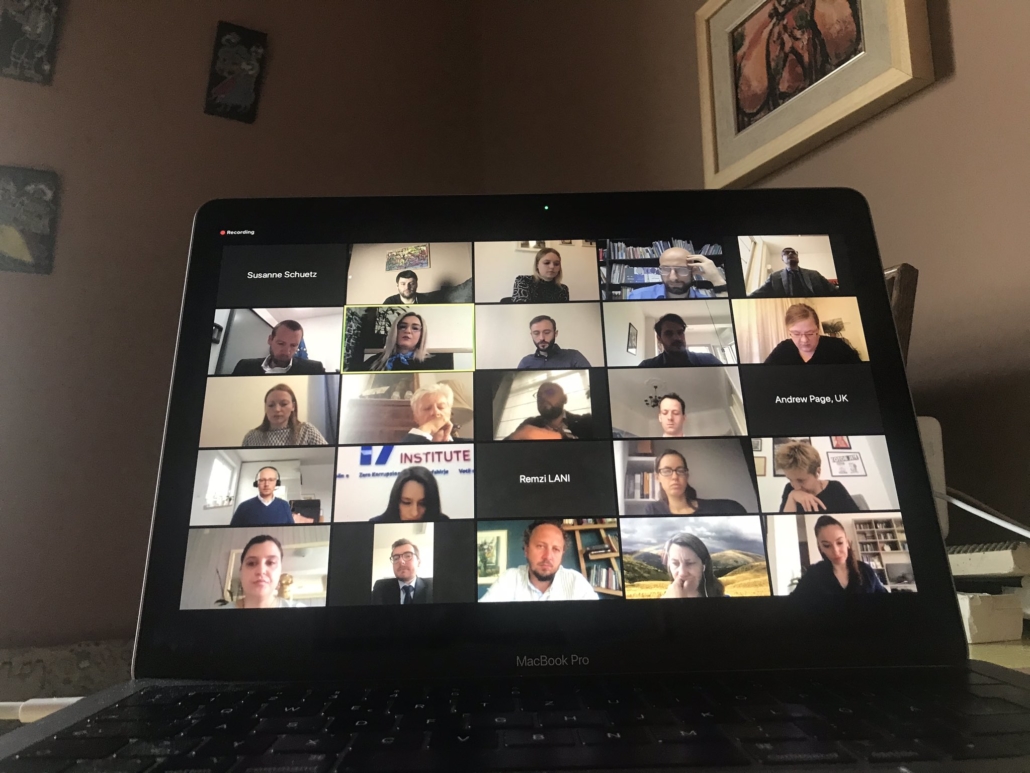
9 June 2020 – Today, TEN members took part in the “COVID-19 Pandemic in the Western Balkans: Effects on Democracy, Rule of Law, and Civil Society” closed-door workshop organised by the Aspen Institute Germany. This workshop gathered members of the expert community from the EU and the region along with officials from the EU and its member states. As a basis for discussion, six TEN representatives presented a working paper which addressed some possible long-term effects of the COVID-19 pandemic on critical democratic principles and rule of law in the Western Balkans. The participants also discussed the way forward in the coming period, stressing the importance of empowering civil society, the media, and national parliaments in their watchdog functions and not neglecting women and vulnerable groups as those most affected by the ongoing pandemic. Insights from this discussion will contribute to the forthcoming TEN policy brief, which tackles the impact of the COVID-19 pandemic on the functioning of rule of law and democracy in the Western Balkans.

CSOs from Montenegro and Serbia call for the lowering of tensions

PODGORICA / BELGRADE – Candidates for the membership in the European Union should resolve the disputed issues in the spirit of regional cooperation, stated ten civil society organizations from Montenegro and Serbia, adding that it is necessary to urgently calm the tensions between the two countries.

In a joint statement, CSOs pointed out that, at a time when leading candidates for EU membership are expected to show stronger political leadership and credibility in fulfilling the commitments and values ​​on which the Union is based, calming the tensions between Serbia and Montenegro and ending the use of inflammatory and passionate speech in statements by officials of these countries is imperative.

The statement was signed by the Belgrade Centre for Security Policy (BCSP), Belgrade Fund for Political Excellence (BFPE), Centre for Contemporary Politics (CSP), European Policy Centre (CEP), International and Security Affairs Centre (ISAC), European Movement in Serbia (EPuS), Lawyers’ Committee for Human Rights (YUCOM) from Serbia and Centre for Civil Liberties (CEGAS), the Institute Alternative (IA) and Politikon Network from Montenegro.

Civil society organizations have stressed that it is the duty of the leaders of both countries to show their readiness to resolve existing disputes through dialogue, instead of inciting low nationalist passions that may bring votes in the upcoming elections, but can have long-term and serious consequences.

“The responsibility lies with the officials of both countries, who should lay the foundations of the European path for all other countries of the Western Balkans, to act rationally and diplomatically when resolving disputed issues, respecting the sovereignty of both countries. We appeal for such issues to be resolved through a dialogue between representatives of relevant institutions in both countries, and not through statements by media officials,“ the statement said.

Governments in the WB still do not provide adequate information on their achievements: First results from PAR Monitor 2019/2020

In the policy development area, PAR Monitor 2019/2020 starts by focusing on the information available to citizens on governmental performance. Evidence shows that citizens of the Western Balkan countries, with the exception of BiH and to a lesser extent North Macedonia, do not have access to basic information about the work of their governments; the level of detail provided in annual governmental work reports is generally substandard to allow proper public scrutiny. Even weaker practices are shown in how understandable and result-oriented these reports are, as well as how regularly the public is informed on the implementation of central planning documents.

This PAR Monitor cycle enables the comparison of trends against the baseline results of the PAR Monitor for 2017/2018 and indicates slight progress at best in the WB generally. Though governments are a bit more diligent in reporting on their work and on the implementation of central planning documents, there has been little change in all aspects of reporting that concern the quality of data – they do not publish open or gender segregated data and performance information on annual results is scarce, for instance, which almost mirrors the baseline PAR Monitor results.

Despite this general picture, there are nevertheless some developments that have brought about notable changes in specific countries in the period between the two monitoring exercises. For example, Kosovo, which scored the best of all countries considered last time, has scored only one point in this round due to the problems in the formation of its government and the acting government’s failure to produce the annual report.

On the other hand, the largest positive developments were recorded in North Macedonia, improving from a very low score in the last round. In this cycle, it assumed the runner-up position of all countries considered due to the settling in of a new government after a period of political unrest, publishing regularly of annual reports, despite scoring zero points last round with no information published.

Apart from these more noteworthy changes, BiH, Serbia, and Montenegro have all recorded slight progress, though nothing too drastic. BiH has improved in terms of its government’s inclusion of gender-segregated data in the information issued about its activities. Serbia’s complete absence of regularity in its government’s publishing of reports on its work plan online has continued, though reporting on central planning documents has improved somewhat. The only notable improvement in Montenegro is regarding the regularity of its government’s annual reporting on its work.

Finally, there has been no change in Albania when it comes to how the government reports on its work. With governmental annual reports and information on the implementation of government-wide plans and strategies largely absent, Albania is at the lower end of regional scale once again.

Loading...

Loading…

Proactive informing from public authorities is still at a low level in the Western Balkans: First results from PAR Monitor 2019/2020

Worrying trends in the limited proactive information made available to citizens of the Western Balkans by their governments, indicated in the baseline PAR Monitor 2017/2018, have shown little change. Although some online information is easily accessible in most of the countries included, limited open data practices and transparency in annual reporting and budgets, as well as limited citizen-friendliness in the presentation of information, are still common.

The same as in the PAR Monitor 2017/2018, the information published by national authorities was assessed on a sample of seven institutions and against same key criteria which enables comparison of results over time: completeness of information, whether available information was up-to-date, the accessibility of information, and the citizen-friendliness of its presentation. Overall, countries scored fewer points for completeness of the information and if available information is updated – 33% of all points compared to 38% in the first monitoring cycle.

Loading...


Loading…

Some progress though is notable regarding accessibility and citizen friendliness in presenting information as compared – out of the total available points for accessibility and citizen friendliness, countries of the region managed to win 26% as compared to 17% in the baseline PAR Monitor. 

Loading...


Loading…

Sample authorities generally fare better at providing more basic content, such as in providing information on scopes of work, contact information, organisational charts, and information on policy documents and legal acts. In almost all countries, however, there is a lack of transparent information as in the previous monitoring on budgets, annual reporting, but also on policy papers and analyses produced by authorities. Although with some improvements, particularly worrisome was the lack of information on cooperation with civil society and other external stakeholders. Despite the emergence of open data portals in the region, publishing of open datasets is still a major challenge.

In terms of individual country rankings, the only notable decline in results is for Albania, with sample authorities for the current PAR Monitor being significantly less proactive than those selected for the previous cycle. At the same time, the lack of proactive publishing of budgetary information come into prominence this time around.

Serbia is still among the top scorers but with slightly poorer results, bringing to light uneven practice of information provision by different authorities within the administration. The lack of annual reporting still represents one of the key issues, on the other hand, it is the only country in the region with basic budget information readily available online.

Sample authorities in BiH have a more user-oriented and coherent webpages, which is why BiH again ranks higher than many. Key weaknesses still relate to the lack of available budgetary information as well as limited information on policy papers, studies, and analyses.

In North Macedonia, the government has taken important steps toward remedying the past limitations in transparency and accountability, which have been translated into concrete measures, and resulted in slightly better scoring. There is still a lack of proactive publishing of budget information and annual reports by administration bodies, and information about cooperation with civil society and other external stakeholders is missing.

Comparing both monitoring cycles, results for Kosovo remain the same, with sample institutions once again being notably negligent when it comes to publishing budgetary information and annual reports – a common characteristic among many WB countries. It should be noted that during the monitoring period, Kosovo government was undergoing major structural changes, with the decreased number of ministries as the result (from 21 to 15) and major restructuring in terms of ministries’ jurisdiction.

Finally, this years’ monitoring in Montenegro have somewhat increased the country’s score, however with no major steps forward. This time, sample authorities were found to be provide less complete and less up-to-date information on scopes of work, but better at presenting their organisational structures.


Loading...


Loading…

For more information about WeBER Project, please visit www.par-monitor.org

Looking ahead at the future of EU enlargement

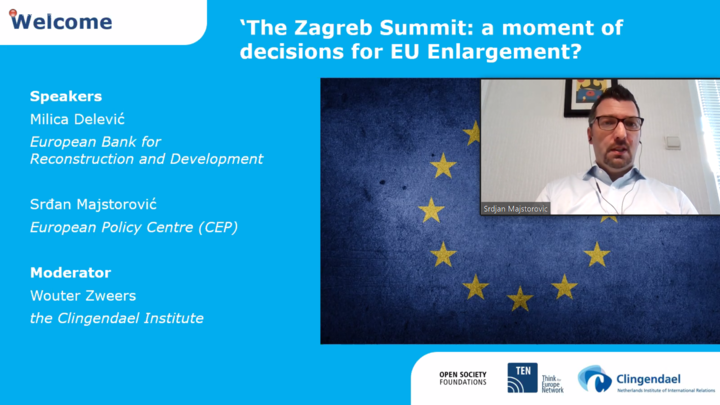
23 April 2020 – “The Zagreb Summit: a moment of decisions for the EU enlargement?” event was organised today in collaboration with the Think for Europe Network (TEN) and the Clingendael Institute. The aim of the event was to provide a better understanding of the current state of the EU enlargement policy and to facilitate the exchange of views between leading experts and the public from the Western Balkans and the Netherlands.


The first part was a closed event, held according to Chatham House rules and featuring Dutch parliamentarians and experts from the region and the EU to share their perspectives on current developments in EU enlargement. In the second part of the event, which was open to the public, Srđan Majstorovic, Chairman of the Governing Board at the European Policy Centre – CEP, Milica Delević, Director of Governance and Political Affairs at the European Bank for Reconstruction and Development, and Wouter Zweers, Research Fellow at the Clingendael Institute, discussed the effects of the COVID-19 Crisis on EU – Western Balkans relations, the prospects for the Zagreb Summit, the revised enlargement methodology as proposed by the European Commission, and the outcomes of the March European Council.


Regarding the new enlargement methodology, Majstorović highlighted that his advice to enlargement countries is to adhere to the new methodology and to focus on the issues that can be delivered within clusters that are defined with this methodology. “The new methodology is a positive sign, but there are no guarantees. What is most important for EU enlargement is the readiness of candidates, more credibility from the side of the EU, and the broader context in which the EU will find itself”, Majstorović said.


Delević also pointed out that “we should not blame the old methodology for everything”, even though “the new methodology does have positive points and less time lag”.


The EU – Western Balkans Summit (Zagreb Summit), originally scheduled to take place in Zagreb on 7 May, has been postponed until June. A new date will be sought in June in agreement with the President of the European Council, or a video conference will be organised at some point by the end of the Croatian Presidency.


“Croatia has managed to keep the enlargement process on the agenda of the Council – we need to take a moment to acknowledge the successes of their presidency in these difficult times”, Majstorović pointed out.


Majstorovic emphasized that having good political leadership is extremely important for the European integration process. “Political leadership is an important component of the integration process, required to avoid the politicisation of enlargement both on the sides of candidates and the EU, respectively. Integration needs to be based on democratic principles and dialogue within democratic institutions. One of the governments showing such effective political steering is the current North Macedonian government. I would like to see more governments showing such a positive political direction”, Majstorović said. He also stressed that the EU should play a bigger role in the coordination of public health policies. “Pandemics do not recognise national borders and we will need to work together – the EU must therefore take the Western Balkans countries into consideration!”


Majstorović also mentioned that the COVID pandemic brings with it the necessity for closer cooperation in the Western Balkans, requiring sharing public health, and other, capacities. This cooperation needs to be enhanced,” he underlined.


The event is organised within the Europeanisation Beyond Process project, with support of the Open Society Initiative for Europe.

The webinar video can be viewed here.

Event announcement – “The Zagreb Summit: A moment of decisions for EU Enlargement?”

The Clingendael Institute and the Think for Europe Network (TEN) are organising a webinar via Zoom looking ahead at the future of EU enlargement.

Date: 23 April 2020
Time: 16.00 – 17.00

Will the Zagreb Summit provide new momentum in the EU accession process? Can we expect actual negotiations with Albania and North-Macedonia to begin soon? And will the revised enlargement methodology lead to a more effective accession process?

This webinar aims to give you a better understanding of the current state of enlargement and to facilitate an exchange of views between leading experts and the public from the Western Balkans and the Netherlands.

Speakers & programme

Wouter Zweers (Research Fellow at the Clingendael Institute)
Milica Delević (Director Governance and Political Affairs at the European Bank for Reconstruction and Development)
Srđan Majstorović (Chairman of the Governing Board at the European Policy Centre – CEP).

They will discuss:

the revised enlargement methodology as proposed by the European Commission
the outcomes of the March European Council
the prospects for the Zagreb Summit
the effects of the Corona crisis on EU-Western Balkans relations.
You will have the opportunity to ask questions and see them answered by our experts.

Registration

No matter whether you are a seasoned expert on the Western Balkans or just curious about what the enlargement process actually entails, you are most welcome to join.  After registration you will receive a Zoom link and password.